Own the profession around your product
Salesforce did not make another CRM demo. They made the film every salesperson would watch — including the eight in nine people outside their usual funnel.
The Story of Sales
8 years ago, Salesforce predicted the future… by financing a feature film documentary about the story of sales itself. It was a genius idea, quietly.
The results? Over $20M in 1 year of sales.
The sales team loved it. As a lead magnet, it still is cherished, and the proof is that the movie is STILL being used today. Check it out.
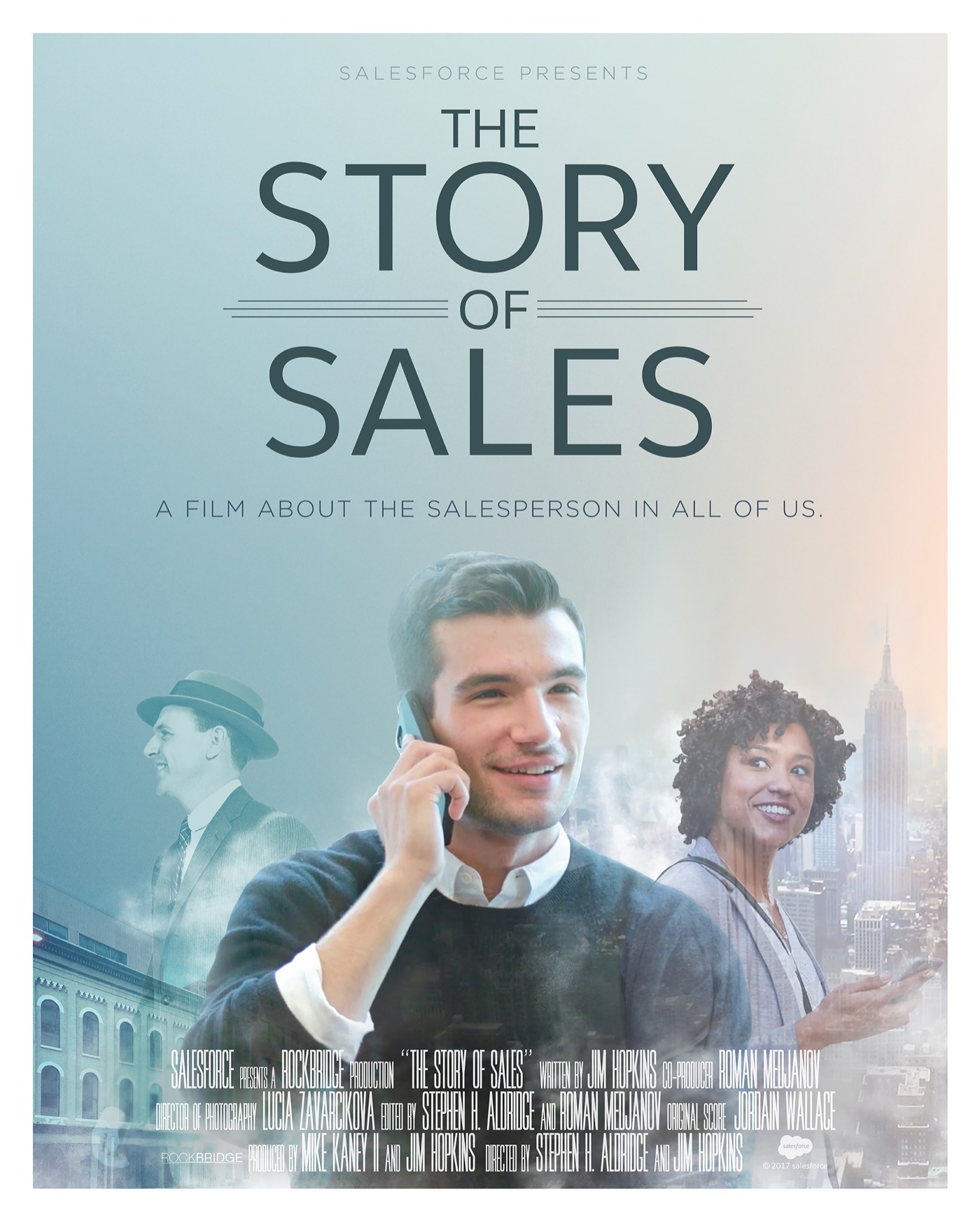
Salesforce already owned CRM. The bolder move was to own sales — the work, the people, the reputation. We made a customer-centric feature with teaching value for anyone who sells, and we kept the company name out of the film. The oxymoron was the strategy: never say Salesforce, and use the film to sell Salesforce.
“Our intent was really to take the time to educate people on what the sales profession is and what it takes to be a successful salesperson — hard work and genuine care about customers.”
Lynne Zaledonis, VP of Product Marketing, Salesforce
Since 2013 we had made Salesforce product demos, commercials, and customer stories — short-form, easy to digest, built for tight Dreamforce slots. All of it mattered. None of it owned the profession.
Sales is the thing other companies treat as boring, or as a joke. One in nine people Salesforce could reach were in sales, and most of them sat outside the usual software funnel. They needed a film that made selling human again — and a studio that knows how to take a dense, unglamorous subject and make it feel inevitable to watch.
That is the Unicorn job. We are the team you hire when the category looks complicated, technical, or dull, and you still need to brand yourselves so thoroughly that the market comes to you.
Research with thought leaders first produced what would have been a long talk. We refused that. We followed a working salesperson for months so every idea in the film had a person attached to it. Shoot started in May. Post began in month two. A red-carpet premiere at Dreamforce closed it in November. The only footage we did not shoot ourselves were archival instructionals from the last century.
Produced with RockBridge Productions. Roman Medjanov, Unicorn co-founder, co-produced and edited. Directed by Stephen H. Aldridge and Jim Hopkins.
Salesforce still hosts the film as a chaptered player on their own site. Press play. Pick a chapter. That is the product: an owned destination for the brand of sales, not a campaign that expired with the quarter.
Watch on Salesforce.com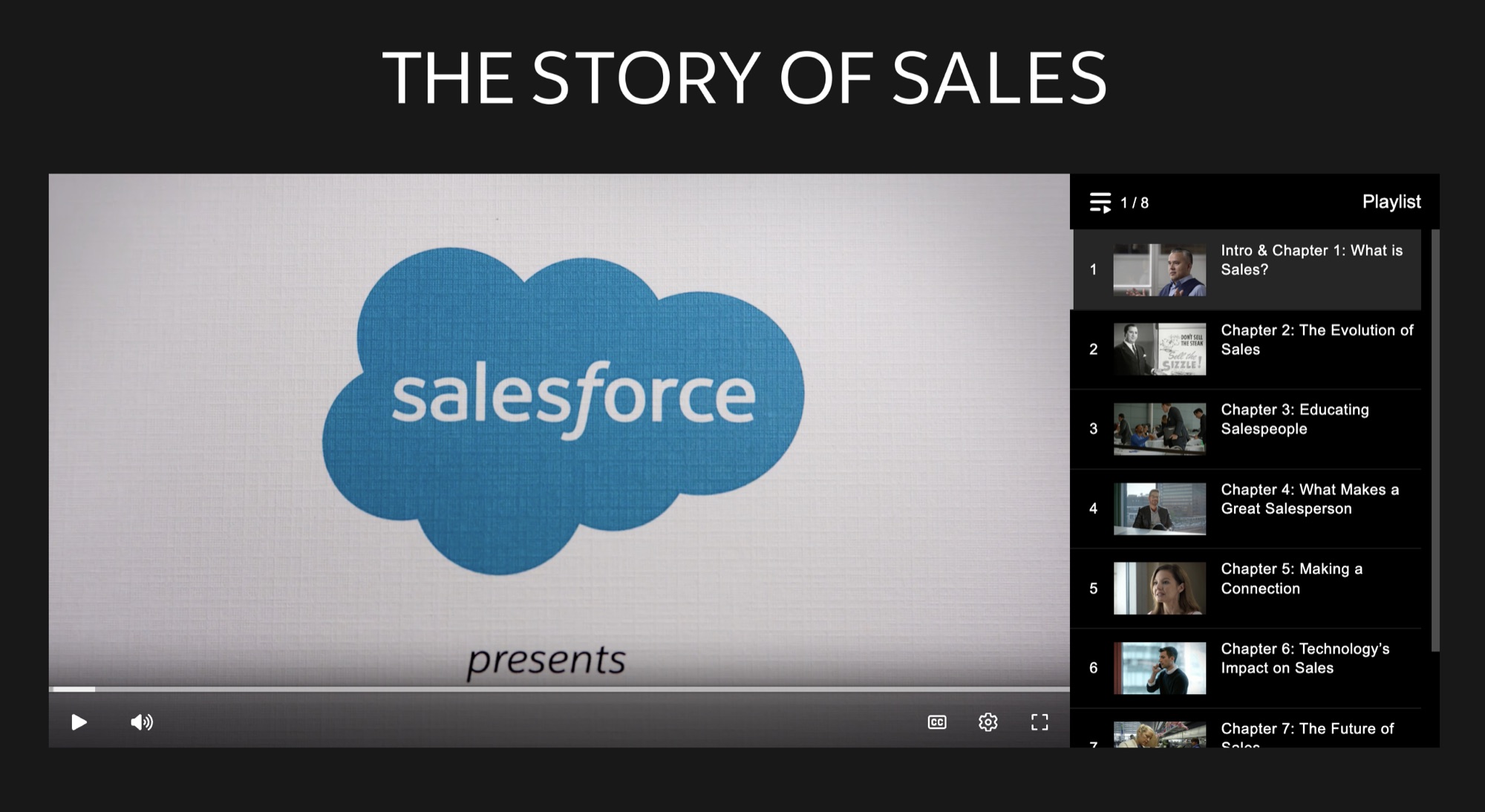 salesforce.com/campaign/story-of-sales
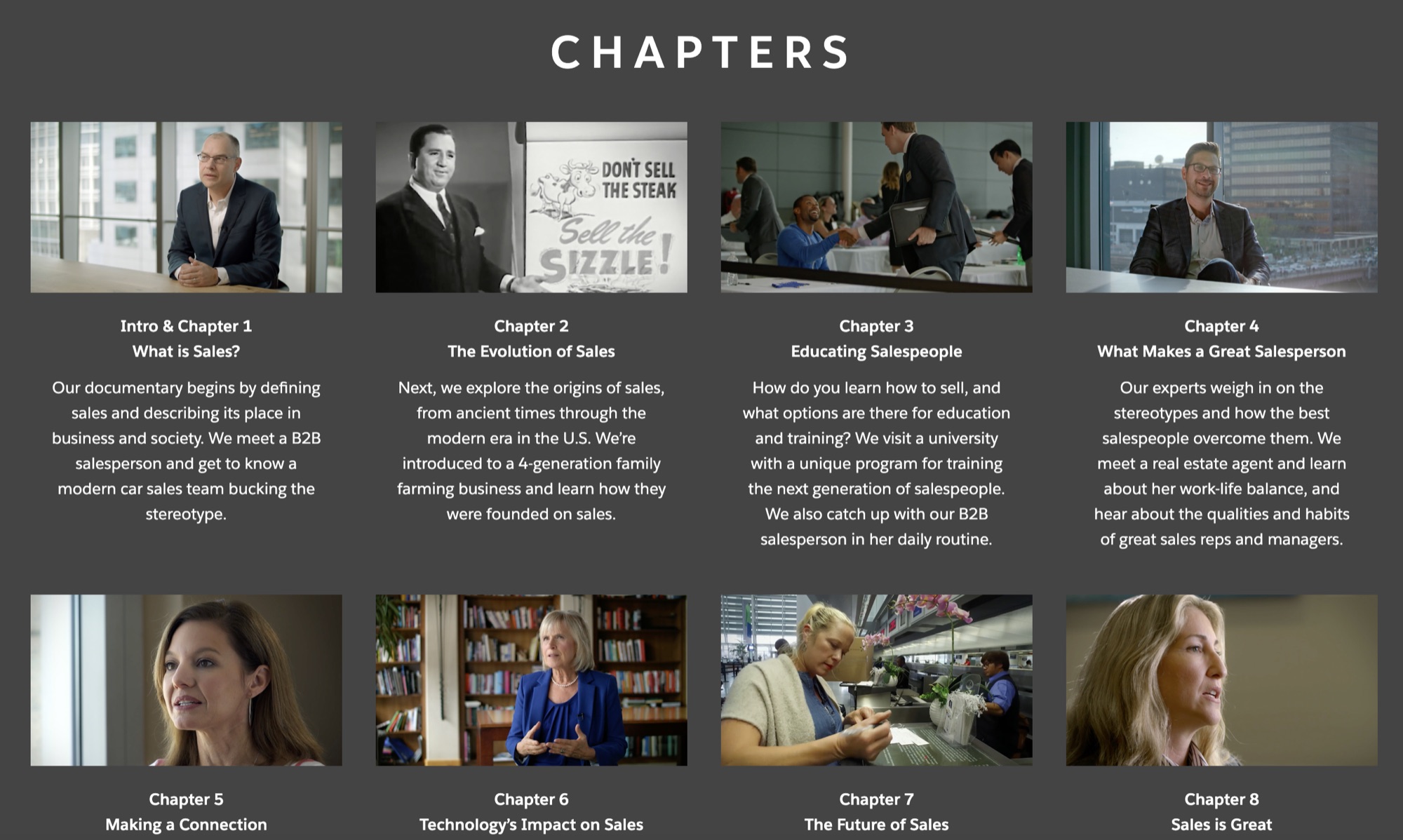
 The site does not dump eighty minutes on the viewer. It gives them a map. Each chapter is a lesson, a character, and a reason to keep going — the same structure universities now use as teaching material.
It lives on IMDb. Salesforce announced it as the world’s first documentary all about sales. Wistia wrote the production story. That is what happens when you make something people would watch even if you were not selling software.
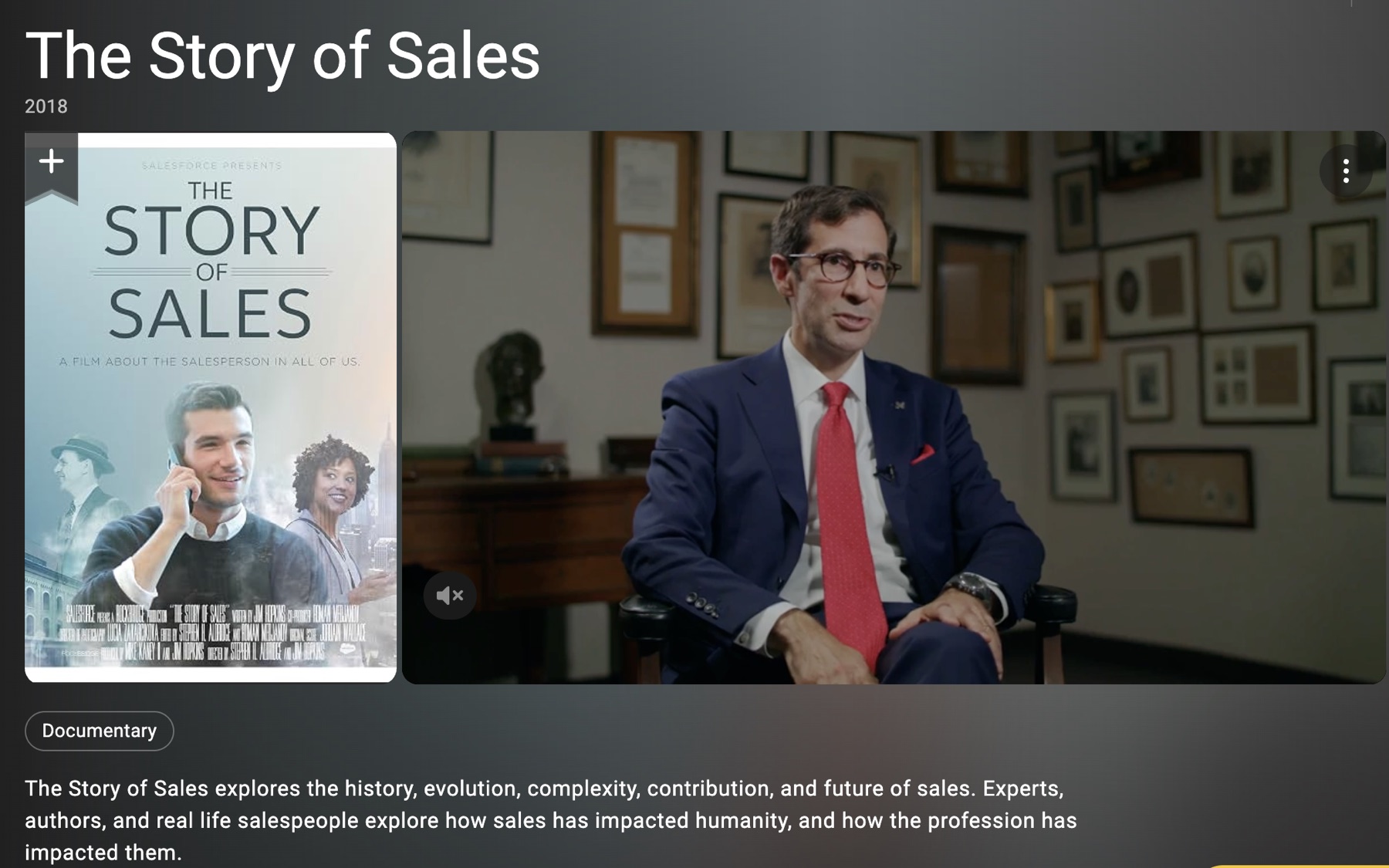 IMDb: The Story of Sales (2018)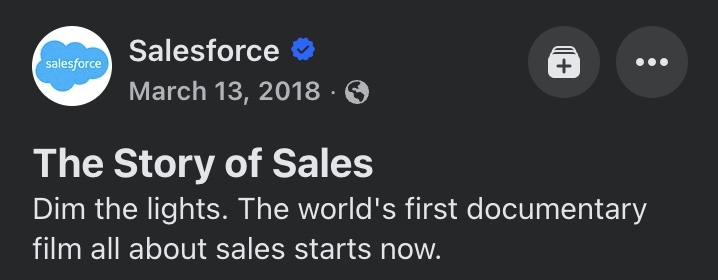
“Dim the lights. The world’s first documentary film all about sales starts now.”
Salesforce campaign site IMDb title page How Salesforce made it, on Wistia$20M
Salesforce’s estimate of sales in the first twelve months from the film and the content cut from it. Mid-six-figure budget. It has generated more since.
There is no box office for a company film. There is pipeline. Salesforce chopped the documentary into blog posts and gated pieces that opened conversations with customers and prospects about the work they actually do. Those cuts produced leads, pipeline, and revenue. The feature is still on Salesforce.com. Universities still teach with it.
“Gating the content generated a significant amount of leads, pipeline, and revenue, too.”
Lynne Zaledonis, VP of Product Marketing, Salesforce
Founders and CMOs hire Unicorn when they want the same move Salesforce made: stop explaining the product, start branding the world their buyers live in, and build a film that keeps earning.
Salesforce did not make another CRM demo. They made the film every salesperson would watch — including the eight in nine people outside their usual funnel.
The documentary almost never says “Salesforce.” People still found the source. Great content promotes the company that was brave enough to make it.
Eight months produced a feature, a chaptered website, gated cutdowns, blog posts, campus screenings, and years of pipeline. Short product clips cannot do that.
A mid-six-figure film that never named the product. Salesforce estimated more than $20 million in sales from it in year one. That is what category ownership looks like.
Share the product, the buyers, and the reputation you need. We will talk through the story that could brand you the way The Story of Sales branded Salesforce — and the production it would take to make it.